Waste
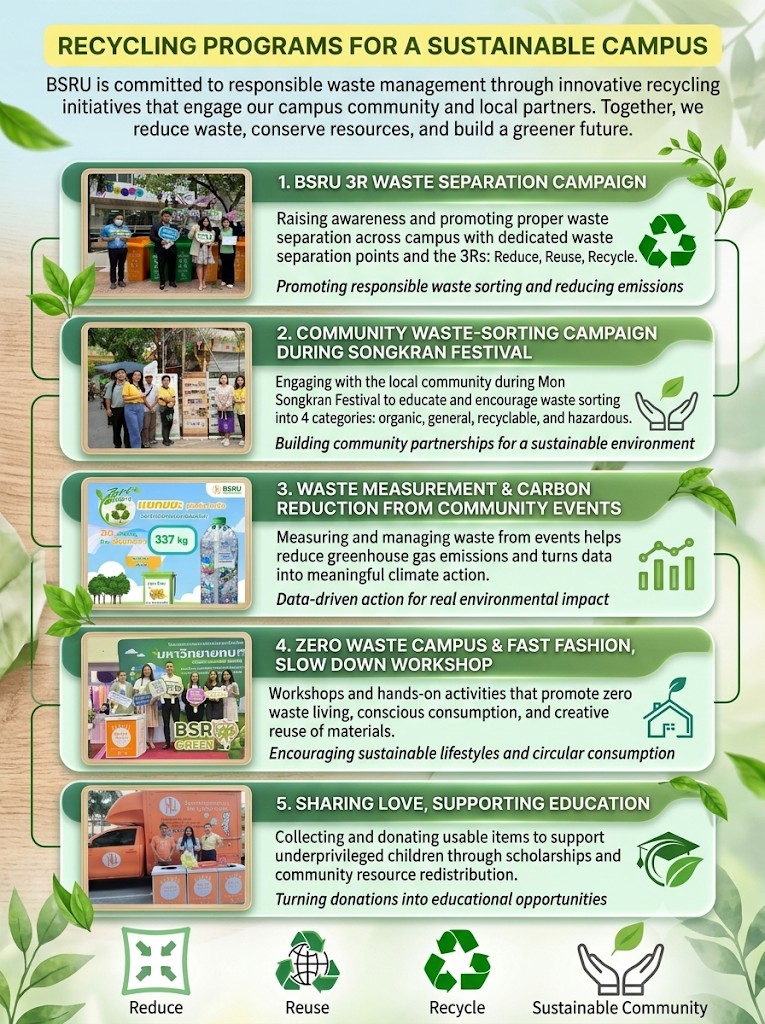
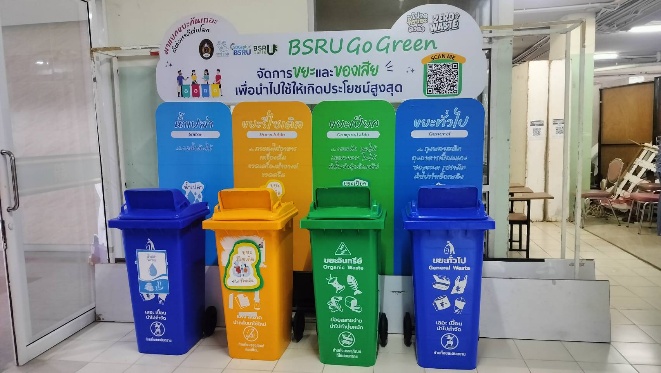
BSRU is committed to creating a cleaner and more sustainable campus through responsible waste management practices. Across the university, initiatives focus on reducing waste generation, promoting recycling and reuse, improving waste treatment systems, and encouraging environmental awareness among students, staff, and local communities.
From recycling programs and refill stations to organic waste reuse, toxic waste management, and wastewater treatment systems, BSRU integrates sustainability into daily campus operations. Through the principles of Reduce, Reuse, and Recycle (3Rs), the university continues to strengthen its commitment to environmental responsibility and sustainable campus development.
Inorganic Waste Management
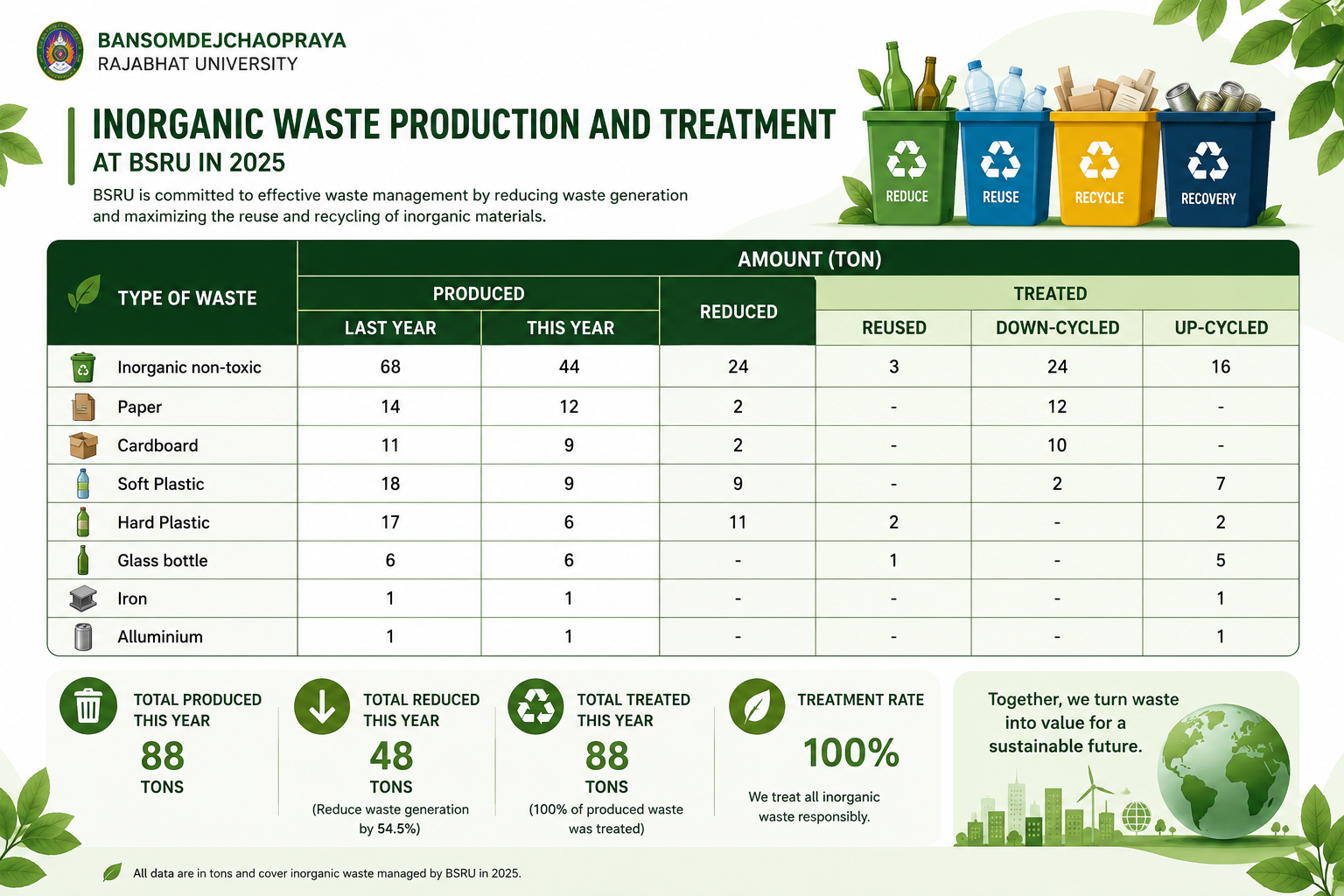
In 2025, BSRU continued to strengthen its inorganic waste management practices through waste reduction, reuse, recycling, down-cycling, and up-cycling initiatives. Compared to the previous year, the university successfully reduced the amount of inorganic non-toxic waste generated while ensuring that all collected materials were treated responsibly. Paper, cardboard, plastics, glass, and metal waste were systematically managed through various recovery processes, supporting resource conservation and reducing environmental impacts. These efforts reflect BSRU’s commitment to sustainable waste management, circular resource use, and the development of a greener campus environment.
PAPER & PLASTIC REDUCTION PROGRAMS
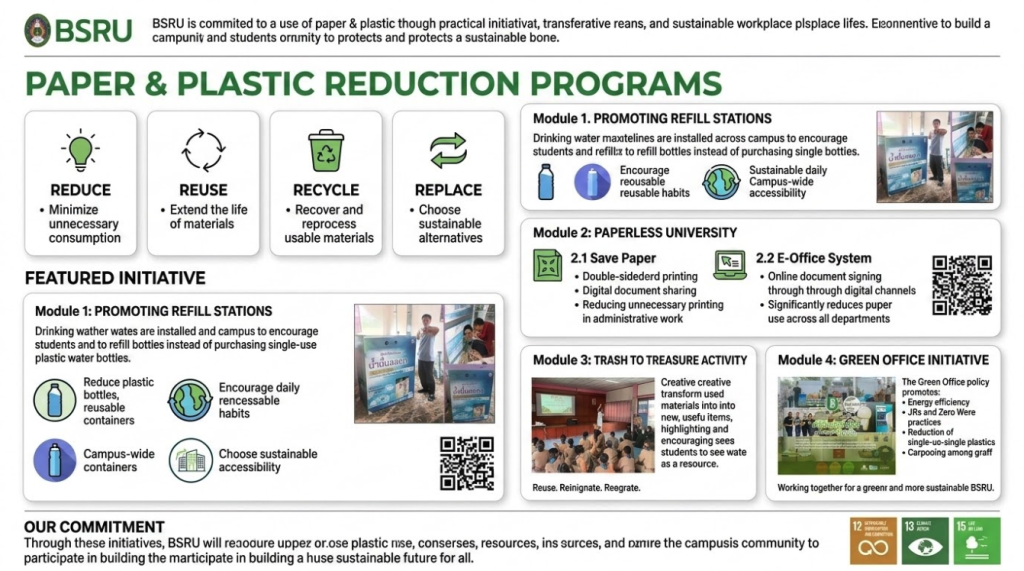
BSRU is committed to reducing the use of paper and plastic through practical initiatives, digital transformation, creative reuse, and sustainable workplace practices. Together, we build a campus culture that protects the environment and creates a sustainable future.
ORGANIC WASTE TREATMENT AT BSRU
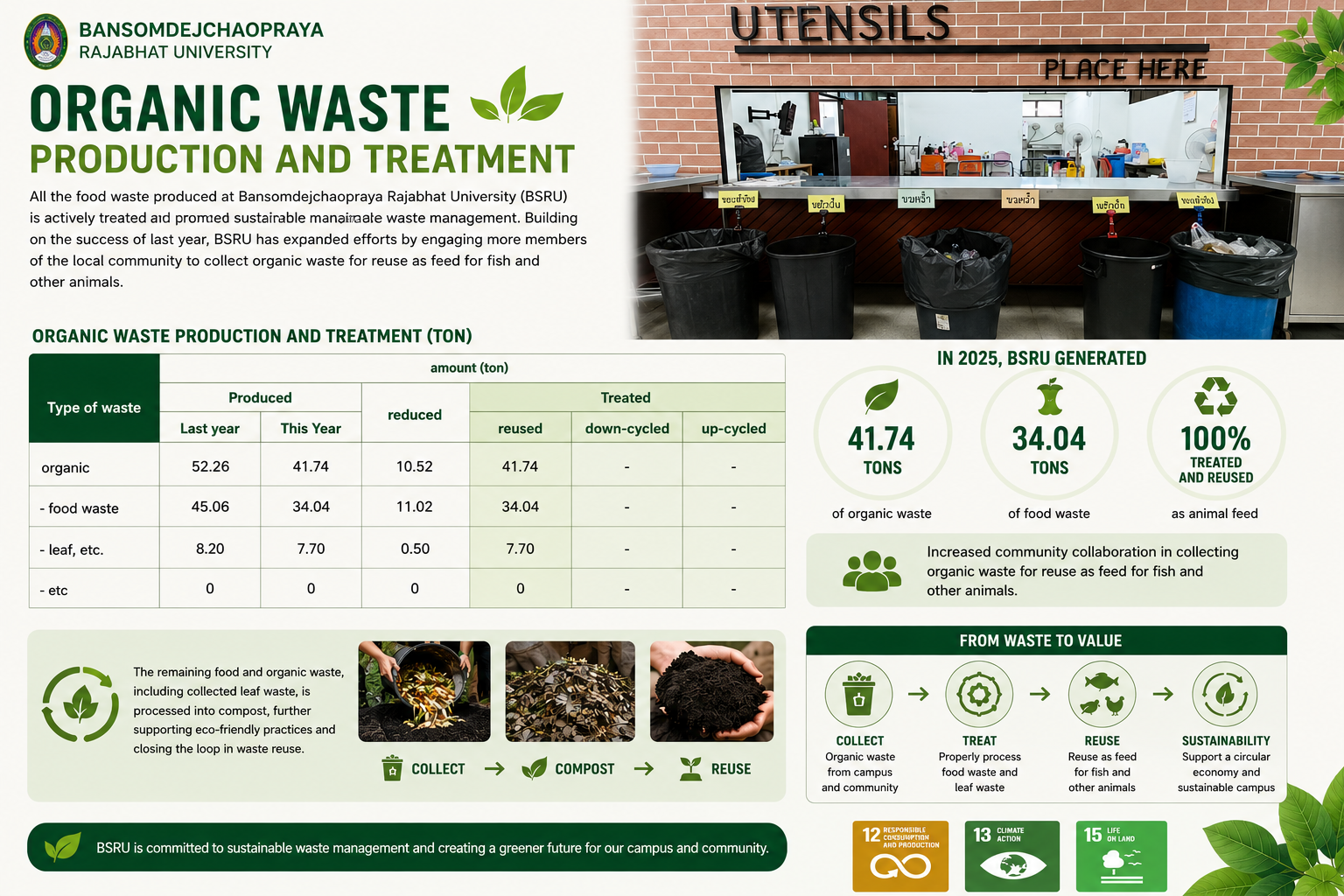
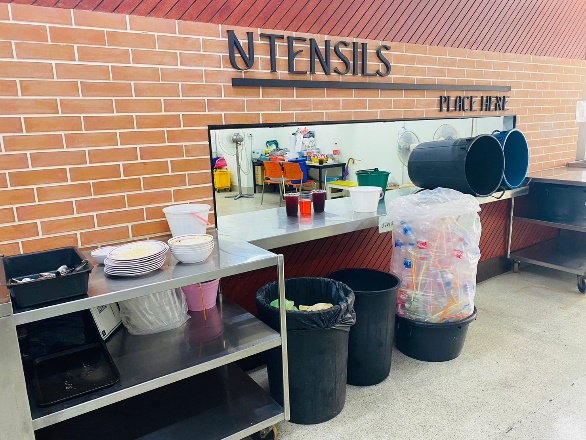
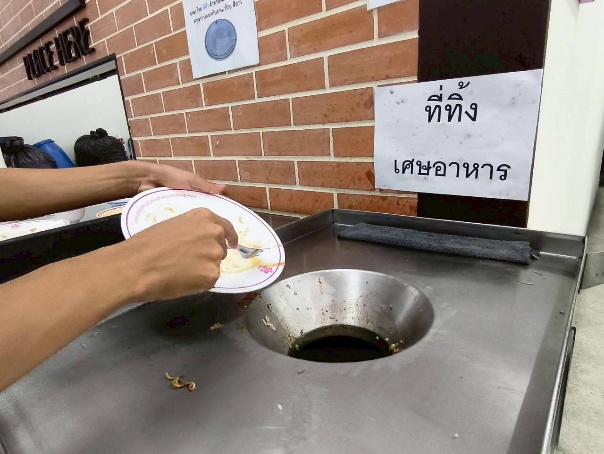
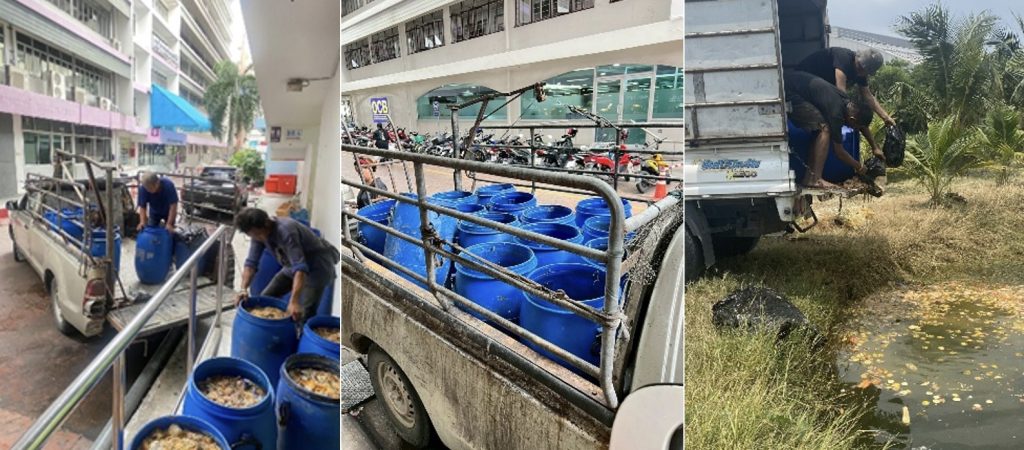
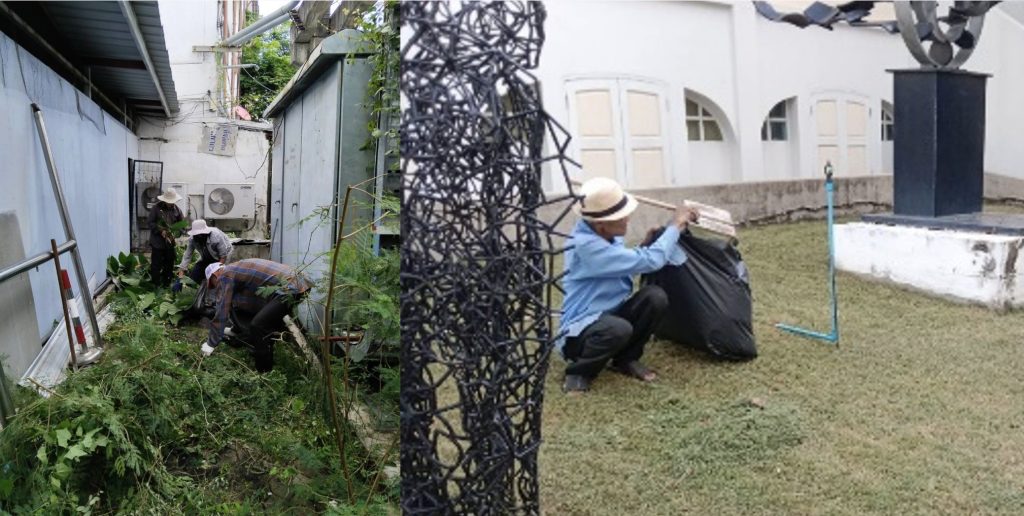
In the year 2025, Bansomdejchaopraya Rajabhat University (BSRU) generated a total of 44 tons of organic waste per month, primarily from food waste and plant matter. Of this, all food waste was collected and reused by the local community. Most of the organic waste came from the cafeteria, where food waste was separated from other solid waste. This food waste was then collected weekly by the owners of a local fisheries farm and reused as fish feed. Building on the success of the previous year, BSRU expanded its efforts by engaging more community members to collect organic waste for reuse as feed for fish and other animals. While plant matter waste remained minimal due to small garden areas, leaf waste was separated and repurposed as compost, supporting environmentally sustainable practices rather than being sent to a landfill.
TOXIC WASTE TREATMENT AT BSRU
Wastewater & Sewage Management
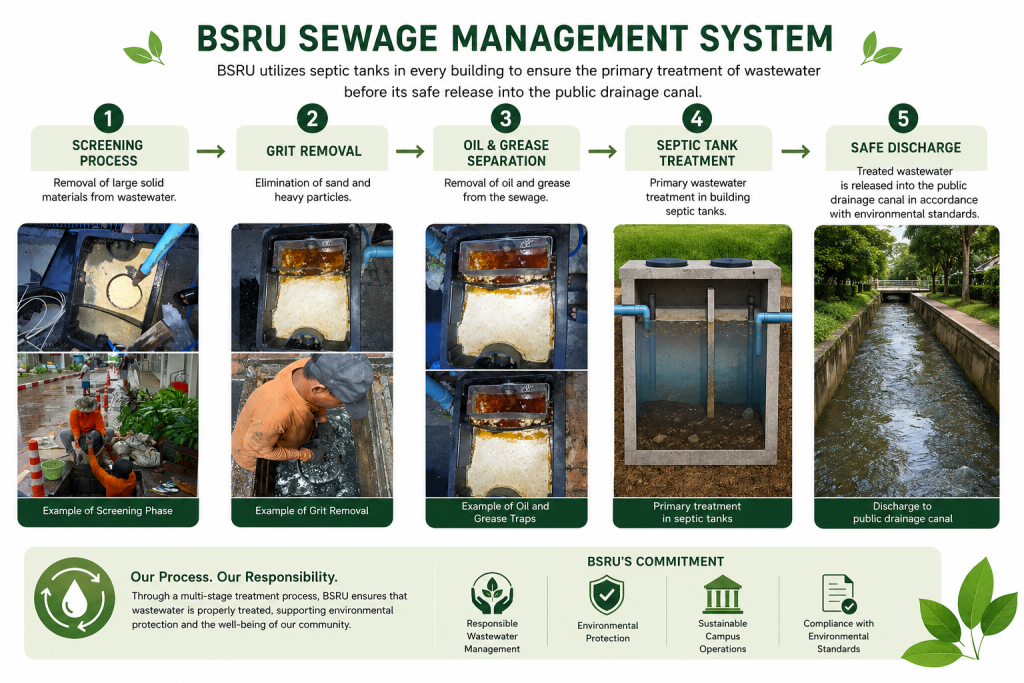
BSRU implements a campus-wide sewage management system to ensure responsible wastewater treatment and environmental protection. Septic tanks installed in every building support the primary treatment of wastewater before discharge into the public drainage system. The process includes multiple treatment stages designed to remove solids, grit, oil, and grease, helping ensure compliance with environmental standards and supporting sustainable campus operations.