Water Management
Bansomdejchaopraya Rajabhat University (BSRU) is committed to sustainable water management through water conservation practices, pollution control systems, and environmentally conscious campus design. The university integrates responsible water use into daily operations by promoting efficient water management, maintaining wastewater treatment systems, and expanding water absorption areas across the campus.
BSRU’s approach includes water conservation programs, sewage and wastewater treatment processes, oil and grease control systems, and the use of water-permeable surfaces that help reduce surface runoff and improve natural water absorption. In addition, the university continues to enhance sustainable infrastructure through green spaces, absorbent pavements, and water recycling systems, supporting long-term environmental sustainability and responsible campus development.
Water Absorption Areas on Campus
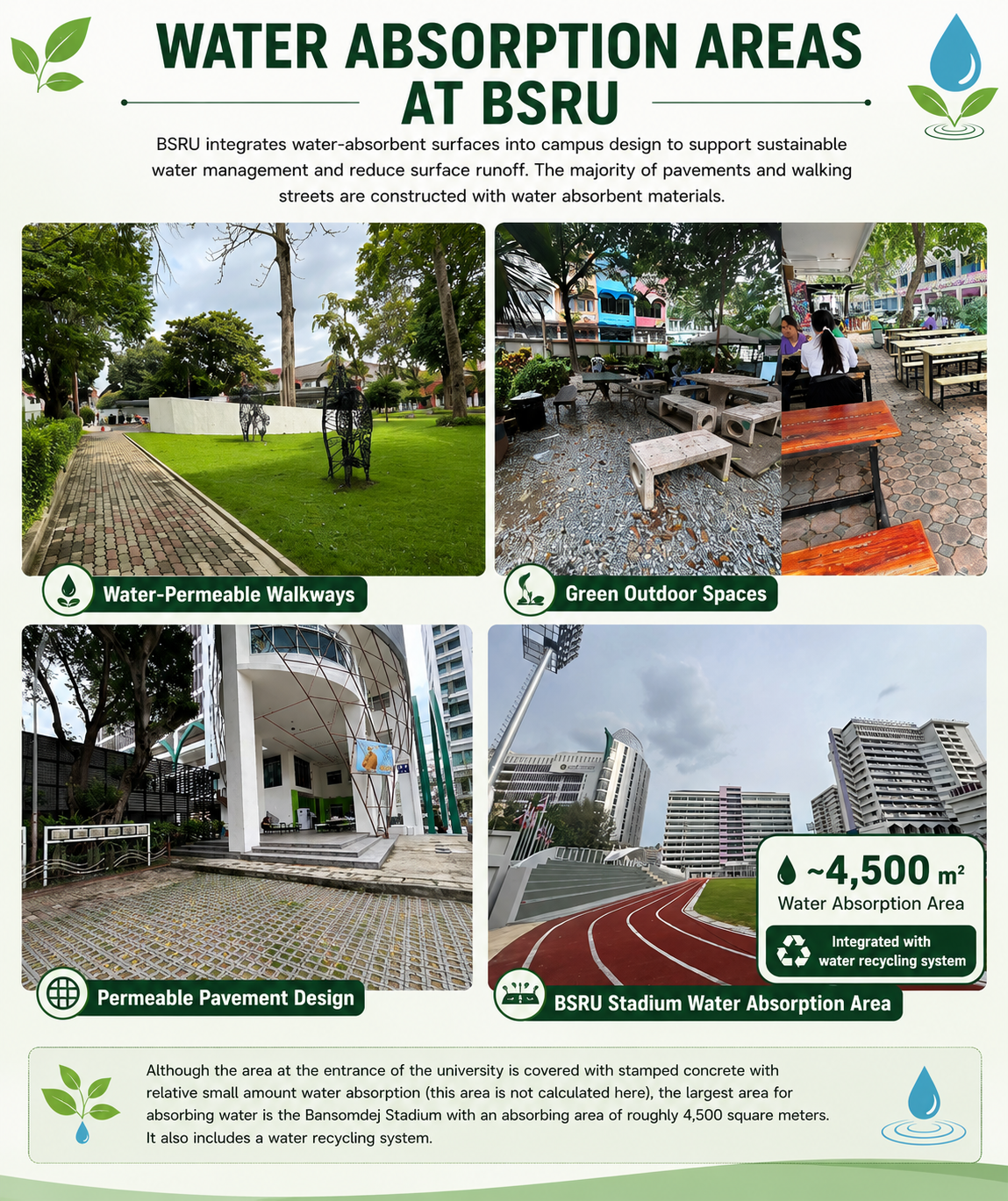
BSRU integrates water-absorbent surfaces into campus design to support sustainable water management and reduce surface runoff. Across the university, the majority of pavements and walking pathways are constructed using water-permeable materials that allow rainwater to naturally infiltrate the ground.
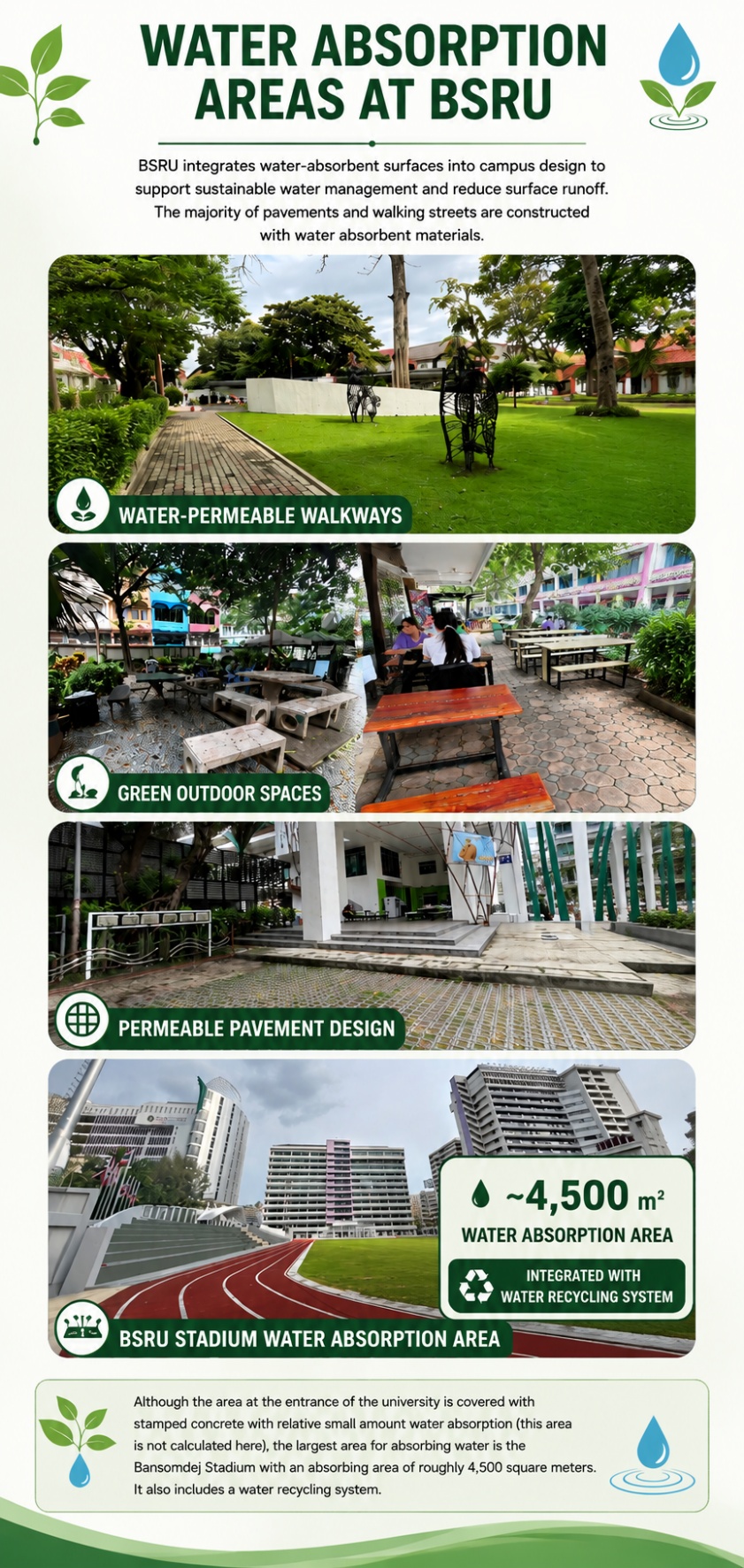
As shown in the examples below, water absorption areas are incorporated into pedestrian walkways, outdoor seating spaces, and open campus environments. The largest water absorption area at BSRU is located at the Bansomdej Stadium, which provides approximately 4,500 square meters of absorbent surface and also includes a water recycling system to support sustainable water use on campus.
Water Conservation programon Campus
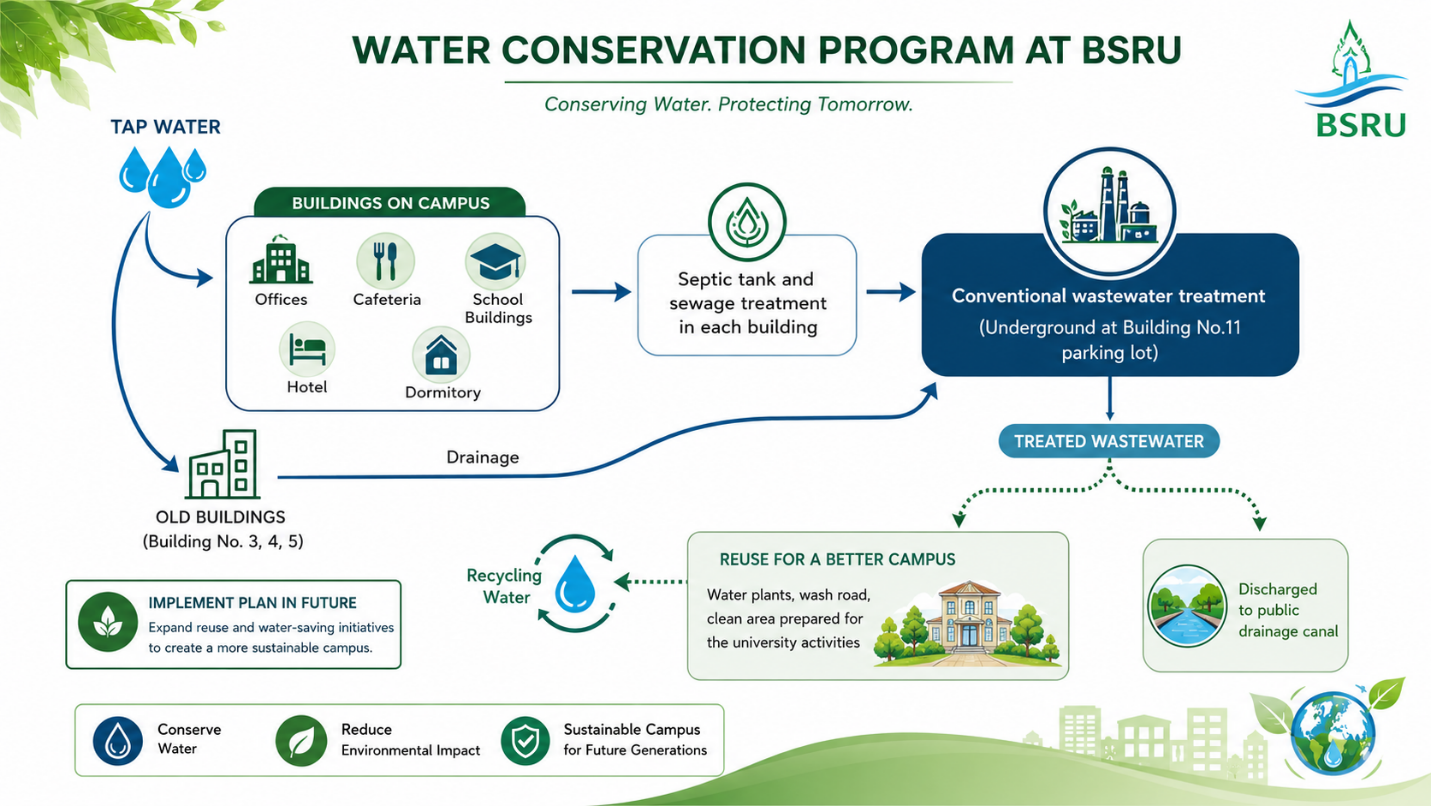
BSRU has initiated the Water Conservation Program to promote sustainable water management on campus. Although the university is located in the urban area of Bangkok with limited space, BSRU is exploring practical approaches such as rainwater harvesting and the use of water-efficient appliances. The program currently focuses on studying water utilization pathways and developing an effective data collection system to support future water conservation initiatives.
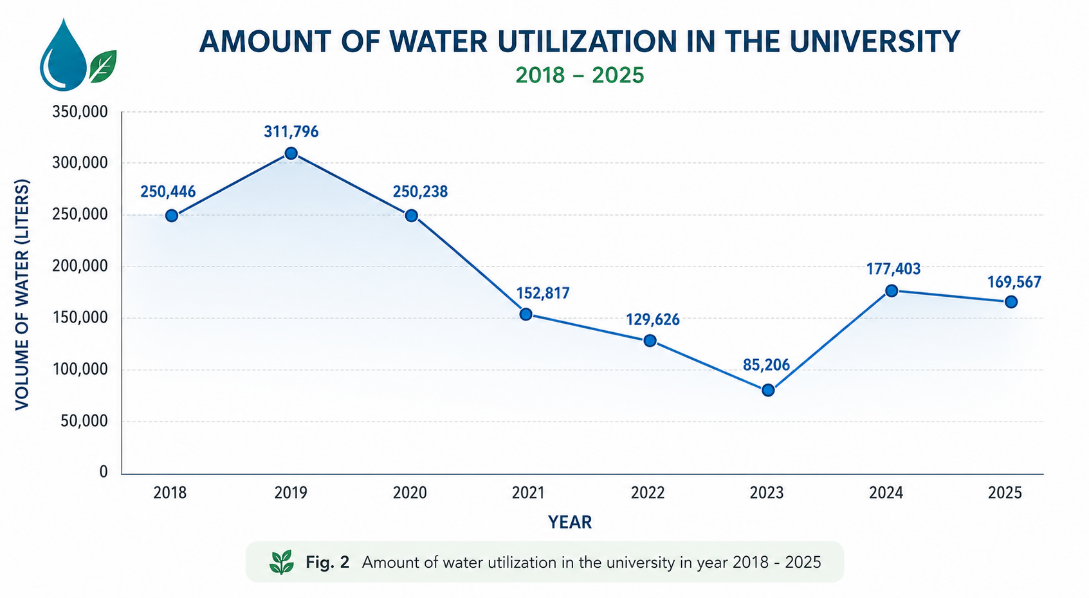
BSRU has continuously collected and monitored water utilization data from 2018 to the present to better understand campus water consumption trends. The historical data serves as an important foundation for planning and implementing future water conservation strategies and improving sustainable water management across the university.
Water Pollution Control
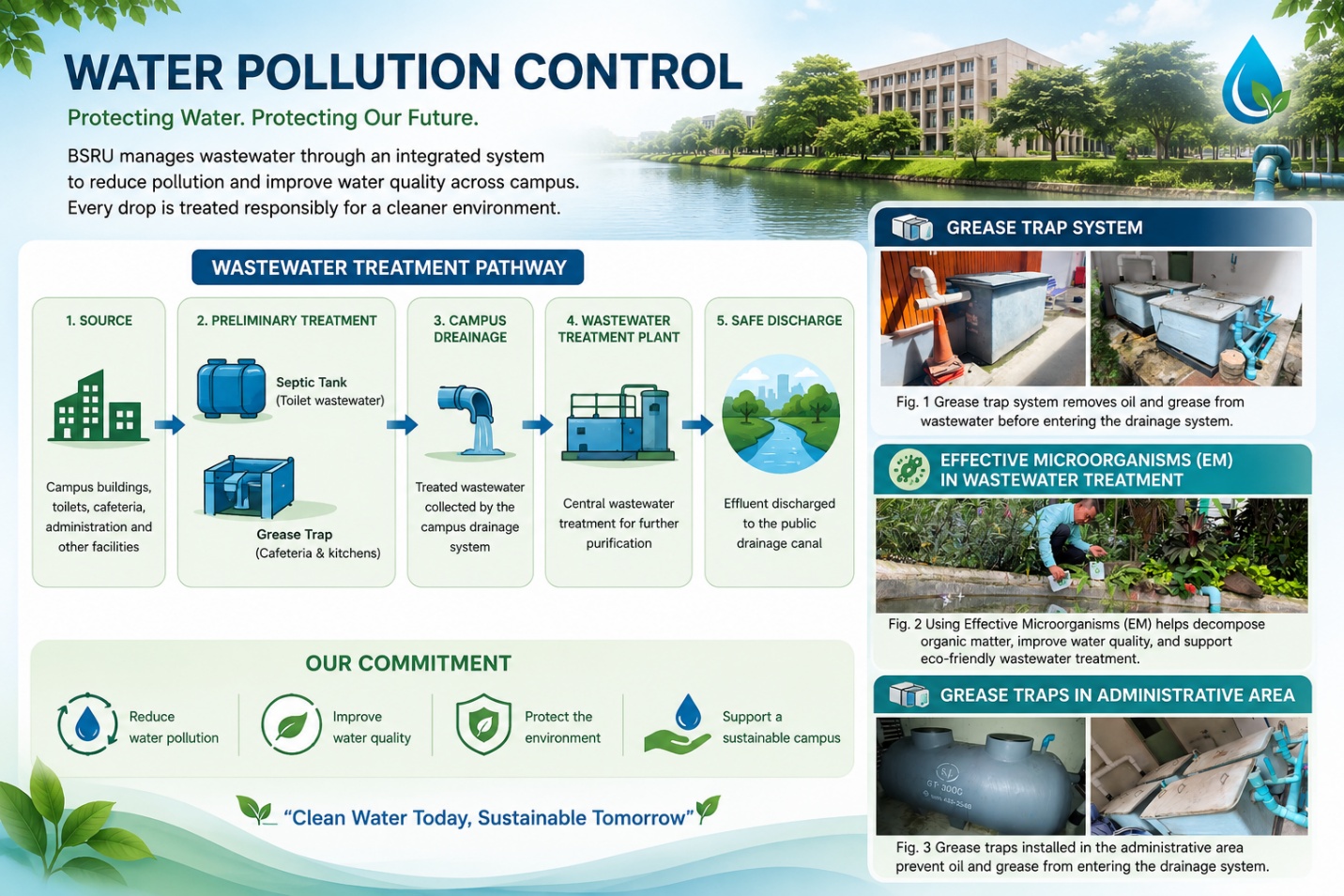
BSRU implements water pollution control measures through an integrated wastewater management system across the campus. Wastewater from buildings and sanitary facilities is initially treated using septic tanks, while grease traps are installed in cafeteria, administration, and demonstration areas to remove oil and grease before entering the drainage system. The treated wastewater is collected through the university’s drainage network and transferred to the central wastewater treatment plant for further treatment before being safely discharged into the public drainage canal. In addition, BSRU promotes environmentally friendly wastewater treatment practices through the use of Effective Microorganisms (EM), which help decompose organic waste and improve water quality in a cost-effective and sustainable manner.