Energy
BSRU recognizes the importance of energy management and climate action as essential components of sustainable university development. The university continuously promotes energy efficiency, renewable energy use, and environmental awareness through campus infrastructure improvements and educational initiatives. Current efforts include the implementation of smart building technologies, the installation of rooftop solar energy systems, the monitoring of greenhouse gas emissions and total carbon footprint, and the organization of climate change–related programs and activities for students and staff. Through these initiatives, BSRU aims to reduce environmental impacts, promote responsible energy consumption, and strengthen awareness of sustainability and climate-related challenges within the university community.
Smart buildings
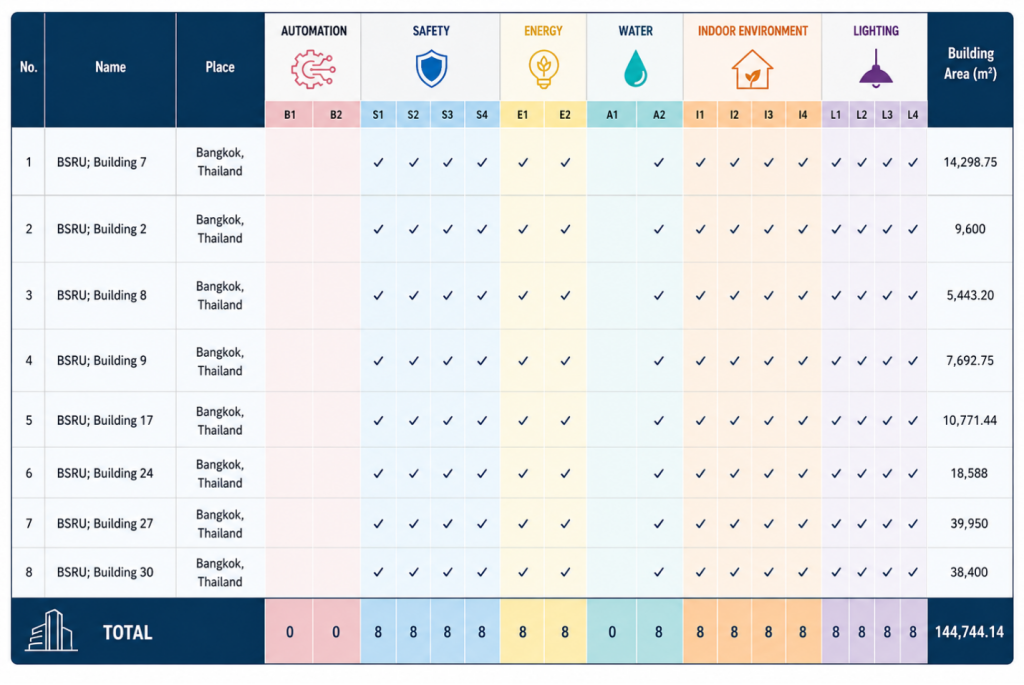
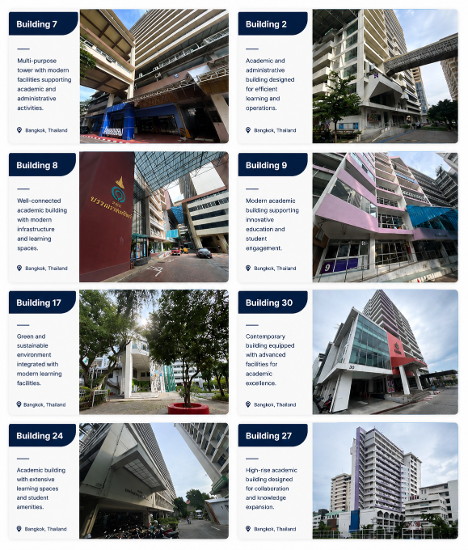
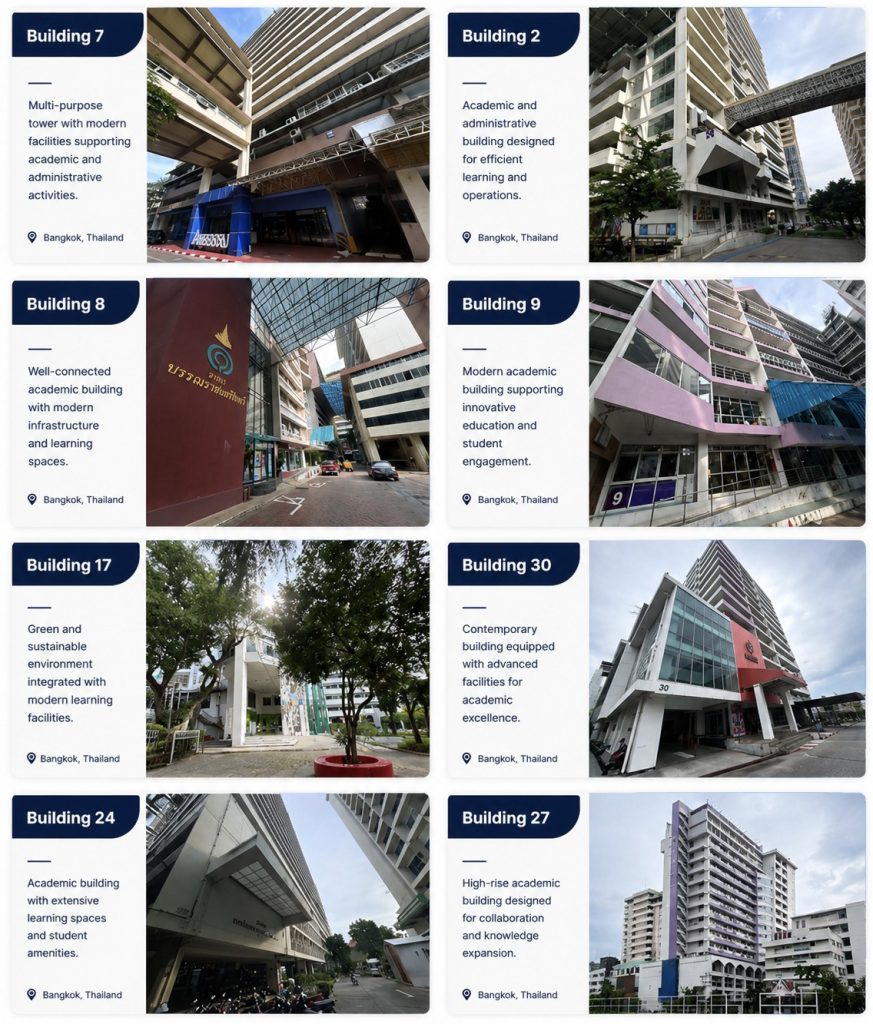
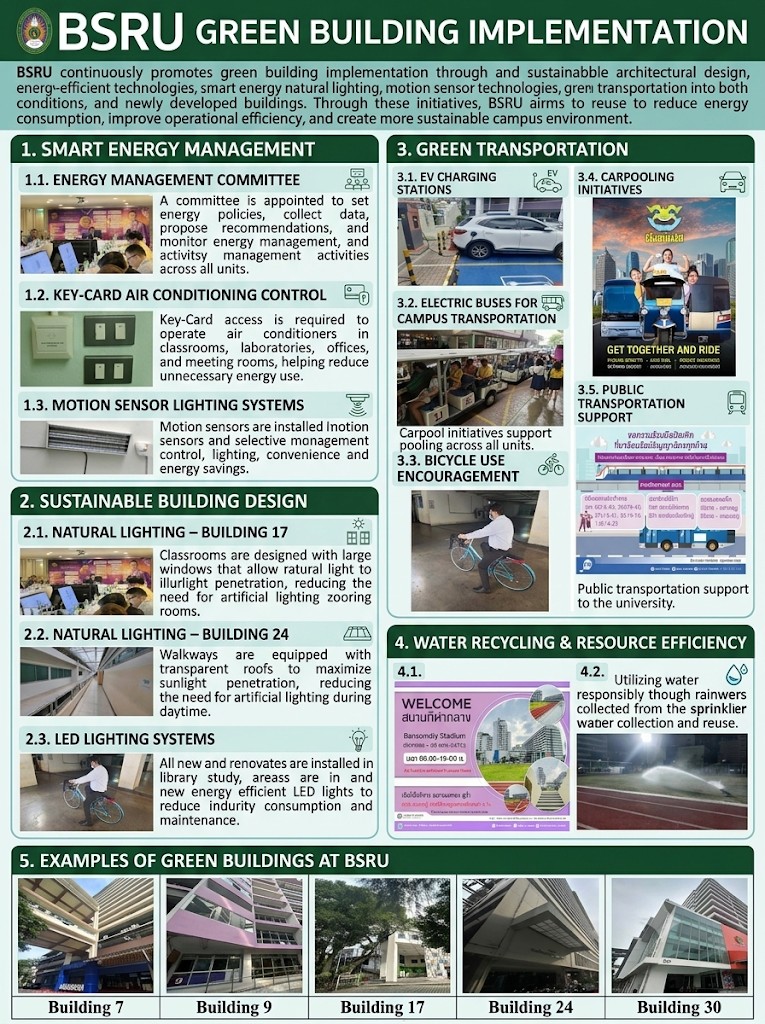
BSRU currently classifies eight campus buildings as smart buildings, integrating smart technologies and energy-efficient infrastructure to support sustainable campus operations and reduce energy consumption. These buildings incorporate features such as natural lighting through glass-wall architectural designs, energy-saving LED lighting systems, key-card-controlled air conditioning systems, rooftop solar panels for renewable energy generation, and integrated building surveillance systems. Through these initiatives, the university aims to improve energy efficiency, optimize resource management, and create a more environmentally sustainable learning environment for students, staff, and visitors.
Green Building Implementation
Green Building Implementation
Solar Energy Implementation
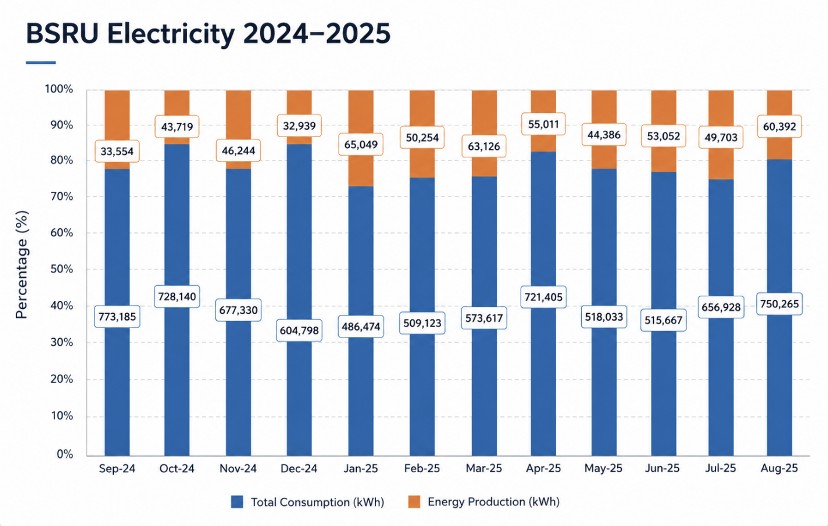
BSRU continues to expand the use of renewable energy through the installation of solar panel systems across campus buildings as part of its commitment to sustainable energy management and climate action. In September 2024, the university completed the installation of rooftop solar panels on six additional buildings, supported by an integrated online monitoring system that provides building-specific capacities, real-time electricity generation data, and daily energy reports.
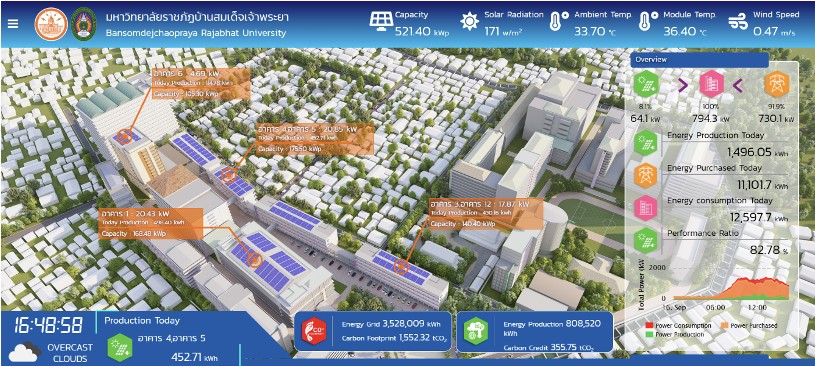
Within 2025, these solar energy systems generated 621,084.65 kWh of electricity, covering approximately 8.15% of the university’s total electricity consumption. Through the adoption of solar energy technologies, BSRU aims to reduce dependence on conventional energy sources, lower greenhouse gas emissions, and strengthen its transition toward a more sustainable and environmentally responsible campus.
Towards a Low-Carbon Campus
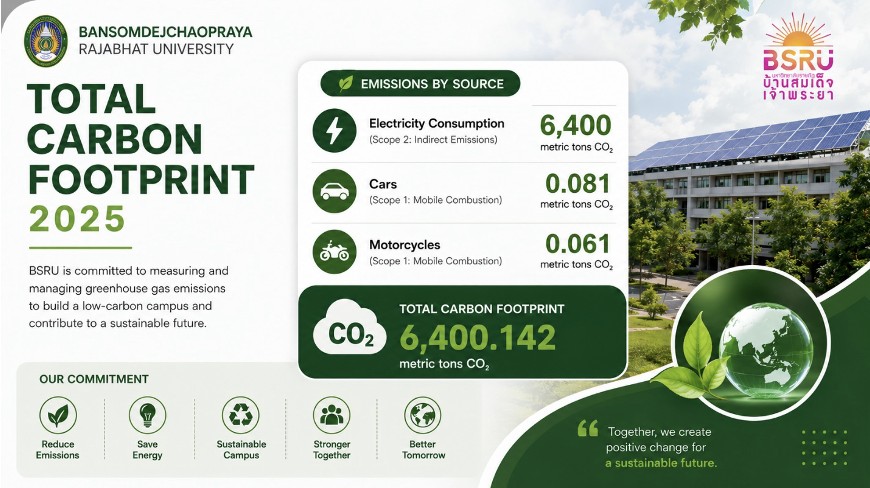
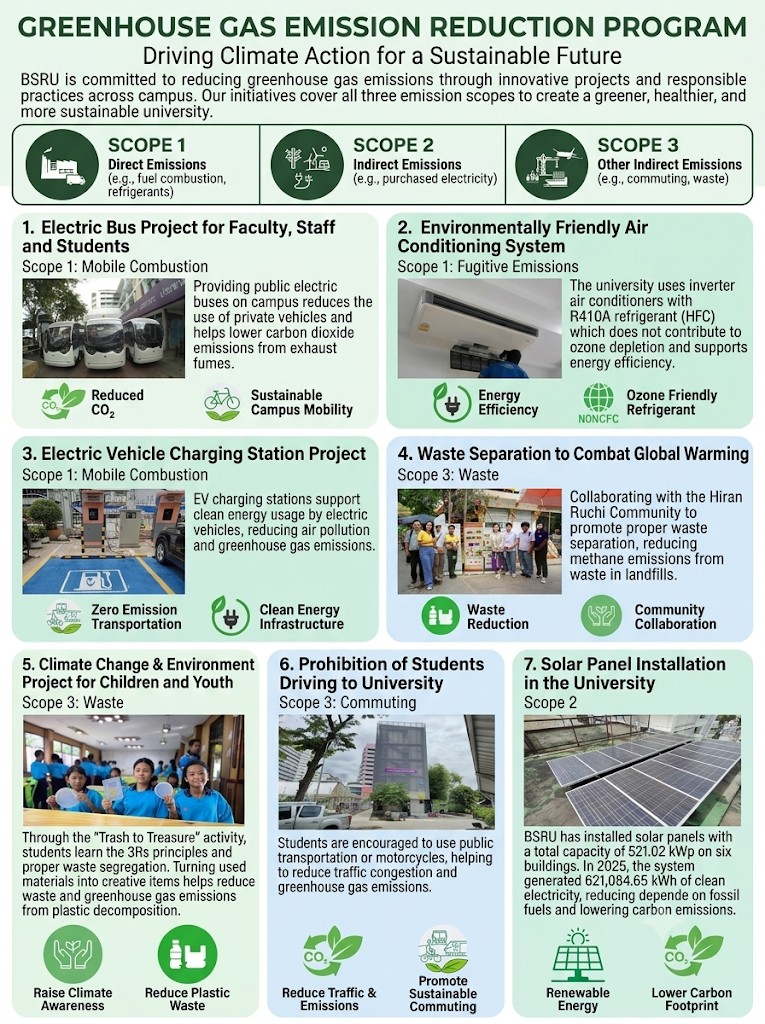
BSRU continuously monitors and evaluates its carbon footprint as part of its commitment to sustainable campus management and climate action. The university’s carbon emissions are primarily generated through electricity consumption, transportation, and daily campus operations. Based on the 2025 carbon footprint assessment, electricity consumption represents the largest source of carbon dioxide emissions, mainly due to the operation of air conditioning systems and the energy demands of teaching, research, and administrative activities. Additional emissions are generated from the use of cars and motorcycles within the university. By assessing these emission sources, BSRU aims to strengthen energy conservation measures, promote sustainable transportation, expand renewable energy use, and reduce its overall environmental impact in support of a low-carbon and more sustainable campus.